Tampa Bay homeowners run the same pre-season checklist every spring - shutters, insurance documents, bottled water. Most skip the step that protects the property itself: clearing it. The debris that causes structural damage during a hurricane is rarely carried in by surge alone. It starts in your own yard, on your own porch, inside your own carport. Getting rid of it before June 1 is not a nice-to-have. For an increasing number of homeowners in Hillsborough and Pinellas counties, it is the most consequential safety work of the year.
Why Tampa Bay Is Different - and Why This Is a Yearly Task
The 2024 season put a number on what an under-prepared metro area costs. Hurricanes Helene and Milton together generated more than 1.3 million cubic yards of debris removed from City of Tampa streets alone - roughly the volume of nearly 400 Olympic swimming pools. Hillsborough County as a whole moved 5.7 million cubic yards of storm debris across both storms. The City of Tampa coordinated an enormous multi-month operation and finished on December 20, 2024, well ahead of FEMA's 90-day deadline of January 11, 2025 - a result the city celebrated as a significant milestone. That is what happens after. Pre-season clearance is about not contributing to that total.
The urgency sharpened again for 2026 with Hillsborough County's expanded evacuation zones. Zone A now stretches farther inland along the coastline and the Alafia River, newly covering parts of Apollo Beach, Town 'n' Country, and mobile home communities that carried no mandatory evacuation designation in prior seasons. Zone E - which already existed - was expanded for 2026 to cover additional neighborhoods in parts of New Tampa and areas near Tampa Executive Airport that were outside all zones as recently as last year. Homeowners who never ran an evacuation drill may now be in a mandatory zone.
Pinellas County did not revise its zone map for 2026, but Zone A and Zone B there remain among the highest storm-surge-risk zones in the country, a product of the county's peninsula geography and its exposure to both Tampa Bay and the Gulf. NOAA designated 2025 an above-normal season. For 2026, NOAA's forecast is for a below-normal season - verify the latest forecast and any midseason updates at noaa.gov, as outlooks are revised throughout the season. Whatever the seasonal forecast, individual storm threats remain real, and the zone expansions reflect updated risk data specific to this region. Pre-season clearance is an annual discipline regardless of seasonal activity levels.
What Actually Becomes a Projectile
The threshold that matters is 74 mph - the lower boundary of sustained winds for a Category 1 hurricane. Below that speed, most unsecured outdoor objects stay on the ground. Above it, they do not. Walk your property with that number in mind.
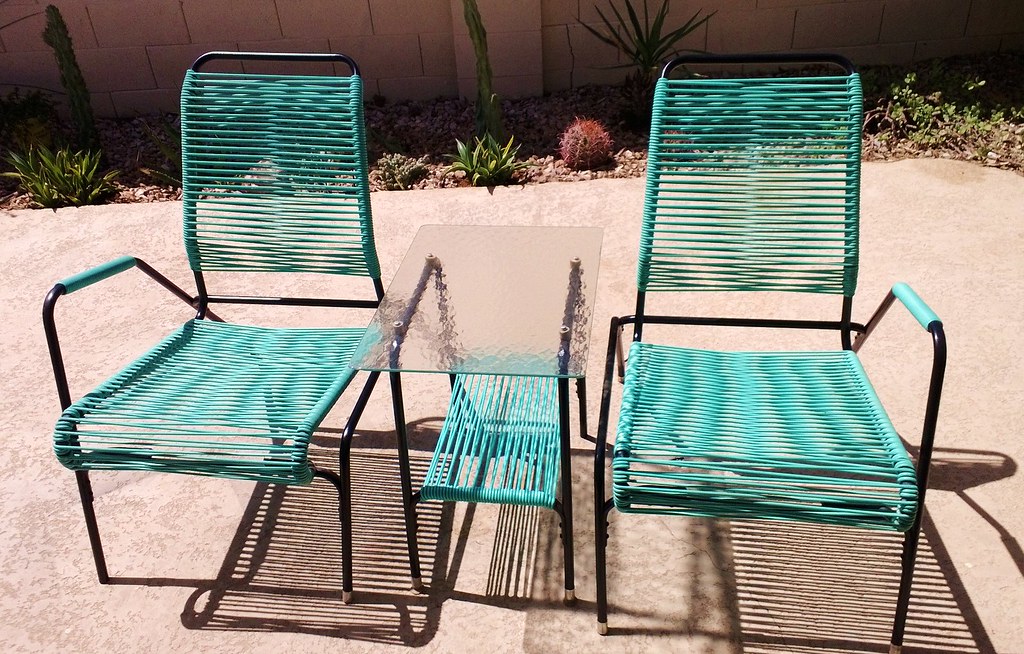
Patio and deck areas: Standard patio furniture - chairs, side tables, and especially umbrellas - is almost never anchored. Umbrellas catch wind like sails and become airborne quickly. Potted plants, even heavy ceramic containers, roll and shatter into fragments. Decorative yard art, garden stakes, solar lights pressed into soil, and wind chimes all separate and travel.
Side yards and storage areas: Old lumber stacked against a fence, spare pavers and concrete blocks, broken equipment waiting for disposal, unused lengths of pipe or conduit - these items separate mid-air and the pieces land at high velocity. Piles of construction scraps are particularly hazardous because no single piece is secured to any other.
Larger items: Trampolines are the most documented example. They are large, light relative to their surface area, and can clear a two-story roofline in a strong gust. A trampoline that lands on a neighboring roof at speed causes as much structural damage as direct wind impact. Grills, lawnmowers, and wheeled trash cans that are not in a secured enclosure behave the same way at sustained Category 1 winds.
The practical standard is this: if it would not survive unsecured on a highway median in a strong thunderstorm, it either needs to be brought inside, properly anchored, or removed from the property before the season opens.
Structures That Should Come Down Before the Season
Beyond loose objects, there is a category of property feature that is not junk but is also not structurally sound. These need to come down through light demolition before a storm does it for you in a less controlled way.
Old wood sheds are the most common example in Tampa Bay neighborhoods. A shed that has been sitting on an unpermitted pad for a decade, with softened wood at the base and a roof that no longer sits flush, will not survive Category 1 winds. When it fails, the pieces travel. A sheet of corrugated metal roofing can move hundreds of feet and embed in a neighboring wall or vehicle.
Screen enclosures and pool cages fail frequently. Much of the aluminum screen room framing in Tampa Bay yards was installed decades ago and has never been structurally reinforced. These enclosures are designed to be affordable and replaceable, not to withstand storm forces. When they collapse, the framing lands on pool equipment, punctures pool liners, and often reaches adjacent properties.
Detached metal-pole carports routinely fail at Category 1 speeds, especially older models with no anchoring below grade. A carport that wobbles in normal conditions should be assumed a liability in a storm. The same is true for pergolas with deteriorated post bases, privacy fences with loose or rotting posts, and any outbuilding where the structure has visible compromise.
The economic argument for early removal is straightforward. Taking down a failing shed in April costs money. Having that shed collapse onto a neighbor's vehicle or your own roof during a storm costs significantly more - homeowner's insurance disputes, potential liability claims, and months of back-and-forth. Light demolition for these structures means manual teardown, sorting debris by material type for proper disposal, and clearing the pad or slab. The finished condition is a flat, unencumbered area that poses no storm risk.
Clearing for Fast Evacuation
When a mandatory evacuation order is issued for Hillsborough Zone A, the realistic window to leave before traffic becomes impassable is 30 to 60 minutes from when most people actually decide to move. I-275, US-19, and the Crosstown back up fast. Every minute spent in the driveway or garage is a minute closer to gridlock.
A cluttered garage defeats that window. If the car is blocked by stored boxes, seasonal equipment, furniture waiting for donation, or a stack of old appliances along the back wall, loading medications, documents, pets, and children takes longer than the window allows. People leave critical items behind not because they forgot them but because they ran out of space and time to maneuver.
A cleared garage means something specific: the car pulls in and loads without moving anything first. A go-bag with documents and medications is accessible in under two minutes. There is space for a generator, a fuel can, and an ice chest - items that matter most on return after the storm. The decision to leave is faster when there is no last-minute scramble to drag furniture inside or tie down whatever is left on the porch.
For homeowners newly placed in Zone E or the expanded Zone A areas, this is a genuinely new situation. If your neighborhood was outside all evacuation zones last year, you may never have run the mental drill of departing under a mandatory order. Running that drill with a cleared property is the only version that actually works when the order comes.
What the County and City Provide for Free - and Where Those Programs Fall Short
Hillsborough County provides real disposal resources. Residential customers can bring bulk waste to the county's Community Collection Centers, with a free annual household allowance - check hillsboroughcounty.org for the current allowance, accepted materials, and site hours before you load up. The City of Tampa runs the SWEEP program (Solid Waste Enhanced Environmental Program), a scheduled 37-week rotating neighborhood cleanup that provides eligible residential customers a no-cost pickup of bulky items - furniture, appliances, yard waste, and similar material - up to the program's volume limit. Eligibility is limited to active City of Tampa solid waste account holders in single-family homes and small multi-unit properties; New Tampa residents are served by Hillsborough County, not the City, and are not eligible. Check tampa.gov for your scheduled collection week and current program guidelines.
For oversized items, Hillsborough County offers a scheduled curbside bulky item pickup for furniture, appliances, and similar items - it carries per-item fees and requires advance scheduling before anything goes to the curb. Check the county website for current fees and scheduling windows.
These programs are worth using for smaller loads. But they have three limits that matter for pre-season clearance:
- Volume: The free annual household allowance at the collection center goes quickly when you are dealing with a full shed teardown plus garage contents plus old outdoor furniture. Once the allowance is consumed, additional material involves fees or a private hauler regardless.
- Speed: Curbside bulky item pickup runs on the county's calendar, not yours. Scheduling in late May for a pre-June 1 deadline may not be available, particularly if demand is high during peak prep season.
- Scope: County programs do not load, sort, or demolish. You are responsible for getting material to the curb or collection center yourself. For large mixed loads, construction debris from a teardown, or structures that need to come down first, that is not realistic without outside help.
Private junk removal fills the gap because the crew does the loading, handles material sorting, and manages disposal routing. For a genuine pre-season cleanout - garage clutter, old outdoor items, and demolition debris from a shed or carport - private hauling is often the only option that gets everything done before June 1. Heavy construction debris like concrete, pavers, and tile typically carries additional landfill surcharges due to weight classifications; a reputable crew will tell you this upfront during the estimate.
The Hazardous Materials Exception
Every pre-season cleanout surfaces at least one of these: a half-full paint can from a project years ago, an old propane tank from a replaced grill, used motor oil from a home oil change, pool chemicals from a pool that has been out of service, or a gas can of unknown age and fill level. None of these can legally go on a junk removal truck.
Paint, motor oil, propane tanks, pesticides, pool chemicals, and gasoline fall under household hazardous waste regulations. No junk removal company can legally accept them, regardless of how much other material is being hauled away at the same time. This is not a company policy - it is a legal constraint that applies across the industry.
The solution in Hillsborough County is the Household Hazardous Waste program, which accepts these materials at no charge to county residents. Check hillsboroughcounty.org for current drop-off site locations, accepted materials, and seasonal hours before loading up for a trip - the site list and accepted categories can vary.
Handle hazardous materials as a separate step before the junk removal crew arrives. Pull them out, set them aside, confirm acceptance at the HHW site, and make a dedicated trip. That keeps the main cleanout moving without the crew having to stop and work around items they cannot legally take.
Booking Your Crew: The April Window
April is the window that works. Not because conditions change after April, but because once a named storm enters the Gulf of Mexico, junk removal companies, demolition contractors, and building suppliers across Tampa Bay are fully booked within hours. Homeowners who waited until mid-May in 2024 found no available crews before Milton made landfall.
An April booking means reaching out for an estimate in March or early April. For a combined job - junk removal plus light demolition - the on-site estimate matters. It lets the crew see the full scope, assess what needs teardown versus what can be hauled whole, identify any hazardous materials that need to go to the HHW site separately, and give an accurate quote for the complete job.
When you call, describe everything upfront. If the job includes demolition of a shed or carport alongside a general cleanout, say so from the first conversation. Combined jobs often run efficiently as a single visit, but the crew needs advance notice because demolition work requires different equipment and disposal routing than standard junk removal. Mixed loads that include heavy construction debris - concrete slabs, old tile, pavers - are handled differently than household items due to weight-based landfill fees, and pricing should reflect that before the job starts.
The finished condition to ask for is broom-clean: the shed pad swept, the carport area free of debris, the garage floor clear from the door to the back wall. That is the correct starting point heading into hurricane season.
After the Storm - What Changes
Pre-season clearance does not make a property storm-proof. But it changes what recovery looks like if a major storm hits.
After a federally declared disaster, normal pickup rules are suspended and replaced with emergency debris collection protocols. Following Helene and Milton in 2024, local governments in Tampa Bay set up dedicated debris collection lanes separate from standard solid waste routes, with different rules for what could be placed at the curb and when. Those emergency rules vary by storm, by the federal disaster declaration, and by municipality - watch local emergency management announcements immediately after a storm before placing anything at the curb, because putting debris out too early or in the wrong category can result in it being bypassed.
FEMA's Public Assistance program can reimburse local governments for eligible debris removal from private property following a major disaster. That reimbursement applies only to post-storm cleanup. Pre-storm clearance costs are the homeowner's responsibility - there is no FEMA pathway for work done before the storm. The post-disaster process runs through local government, not directly through individual homeowners, and eligibility depends entirely on the federal disaster declaration and the specific damage categories it covers.
What pre-clearance changes is the starting position. A property that entered the storm with no loose debris, no failing shed, and no structural liabilities ends the storm with less damage and a simpler recovery path. Fewer insurance disputes, less material to separate and document, and a faster return to normal. The 2024 cleanup effort in Tampa took months even with full city and county resources deployed. Homeowners who contributed less to that volume - because their property was already in order - spent less time waiting for the system to reach them.
June 1 comes every year. The evacuation zones are broader in 2026 than they were two years ago. An April clearance job is the one preparation step that directly reduces what a storm can do with your property against itself and your neighbors - and it gets harder to schedule the longer you wait.