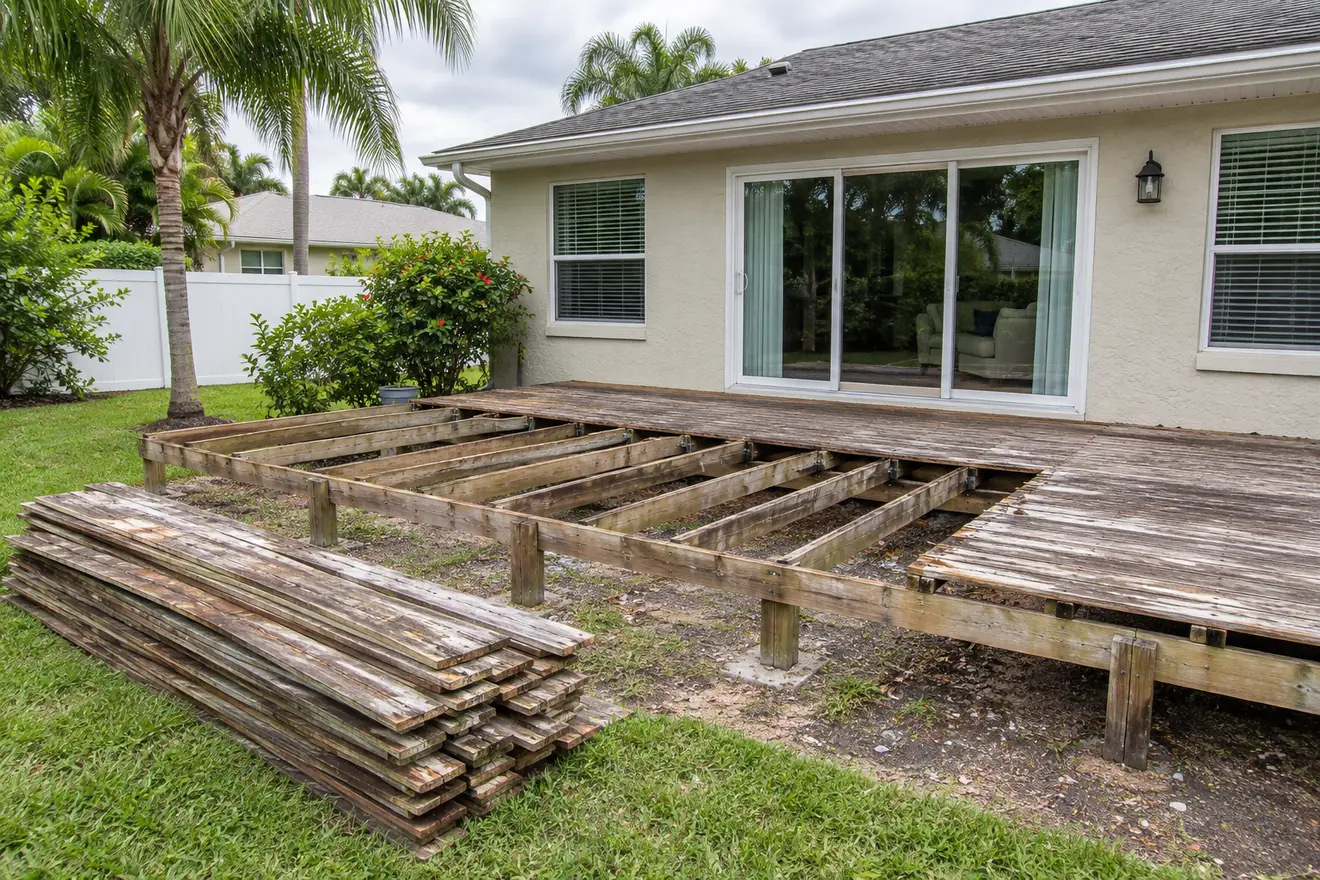
Light Demolition: What It Means and What to Check First
Light demolition is the junk removal industry's term for taking down small, non-structural items and hauling away the debris: sheds, swing sets, decks, porches, hot tubs, fences and interior pieces such as kitchen cabinets. It sits between plain hauling and a licensed demolition contractor's work, and the dividing line is whether the structure carries load or connects to the roof, foundation or utility lines. This page explains where that line is and what to check before anything is torn down. It does not offer the service.
What Usually Counts as Light Demolition
- Detached sheds and playhouses (one example among many; see the shed guide linked at the bottom)
- Swing sets and play structures
- Fences, small decks and porches
- Hot tubs and spas (see the hot tub guide)
- Cabinets, built-ins and flooring before a renovation (see the renovation debris guide)
What these jobs share is that the item is freestanding or easy to detach, small enough to dismantle by hand or with basic tools, and produces a modest amount of debris. A deck is a typical borderline case: a low, freestanding deck is usually treated as light demolition, while a deck bolted to the house, or a raised one with stairs and a roof, deserves a closer look at permits and structural attachment before the work is scoped.
What Is Not Light Demolition
Load-bearing walls, additions, garages, whole structures and anything involving the roof, foundation or gas, electric and plumbing lines call for a licensed contractor and usually a permit. If you are unsure which side your project falls on, call the local building department before work starts.
Light Demolition vs. Junk Removal vs. Full Demolition
- Junk removal: loading and hauling items that are already detached. See the step-by-step junk removal process.
- Light demolition: dismantling a small, non-structural item first, then hauling the debris.
- Full demolition: taking down a structure or part of a building, normally performed by a licensed contractor under a demolition permit.
Permits, Utilities and Older Materials
- Permits: requirements for demolition permits depend on the structure and the jurisdiction, so check with the city or county building department. Ask about the specific item (shed, deck, fence) rather than about demolition in general.
- Utilities: have electric, water and gas lines shut off or marked before anything comes down. Florida's 811 service marks underground utilities for digging work. According to Sunshine 811, the notice should be given at least two full business days before you want to dig; you can call 811 or submit a request on its website. This matters for pulling out fence posts or deck footings.
- Older materials: structures built before the 1980s may contain asbestos or lead paint. Ask whether testing is needed before disturbing them. The EPA's asbestos NESHAP work practices for demolitions and renovations exclude residential buildings with four or fewer dwelling units, which means a single-family home owner may not be covered by that notification rule, but the health risk from disturbed asbestos is the same either way.
- HOA rules: some associations restrict the hours or the type of work, and may require approval before a structure is removed.
How Pricing Is Usually Structured
Providers commonly price light demolition by the volume of debris hauled plus labor for the teardown, and many cannot give a firm number until they see the project. Get a written quote that says what is included: teardown, loading, disposal fees and cleanup of the area.
Questions to Ask
- Is the company insured for property damage and worker injury?
- Who handles permits, if one is required?
- How is the debris disposed of, and are metal and wood recycled?
- What happens if the crew finds rot, wiring or hazardous materials?
Some debris cannot go on a standard truck at all. The guide to what junk removal companies won't take lists the materials that need separate disposal, which is useful if a teardown turns up paint, chemicals or treated materials.
Frequently Asked Questions
What is light demolition?
Light demolition means dismantling small, non-structural items such as sheds, swing sets, fences, small decks, hot tubs and interior cabinets, and hauling away the debris. It does not include load-bearing walls, additions or whole buildings, which need a licensed contractor and usually a permit.
Is light demolition the same as junk removal?
No. Junk removal moves items that are already detached, while light demolition includes taking the item apart first. Some companies offer both, and a written quote should show what the teardown covers in addition to the hauling.
Do I need a permit for light demolition?
It depends on the structure and the city or county, so there is no single answer for the Tampa Bay area. Anything tied to the roof, foundation or utility lines calls for a licensed contractor and usually a permit. Ask the local building department about the specific item before work starts.
What should I do before taking down an old structure?
Confirm permit rules, get utilities shut off or marked, contact Sunshine 811 at least two full business days before any digging, and ask about asbestos or lead paint if the structure is older. Then get a written quote that covers teardown, hauling and disposal.
For a specific project type, see the guides to shed removal, fences, concrete and screen enclosures.