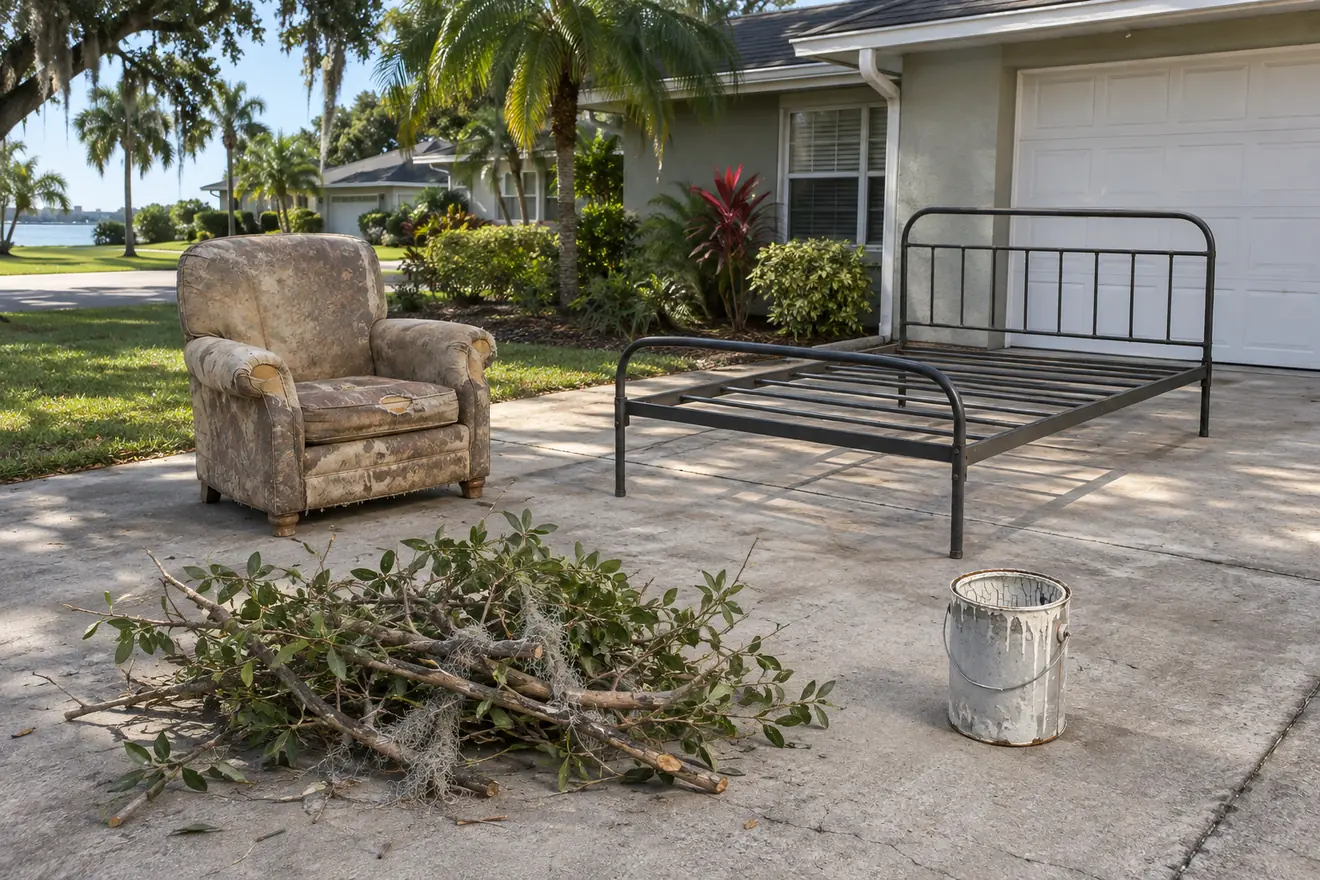
What Do Junk Removal Companies Take? The Short Answer
Most full-service junk haulers in Tampa Bay take whatever two people can carry and a truck can hold, except hazardous or regulated items. In practice that means furniture, mattresses, appliances, electronics, yard debris, renovation waste and the contents of garages, sheds, attics and storage units. What they refuse is a short, predictable list: fuels, liquid paint, chemicals, batteries, medical waste and asbestos. Policies differ from company to company, so treat this page as a general map and confirm the specifics with whichever provider you call. This guide does not haul anything itself.
Usually Accepted
- Furniture: couches, sectionals, dressers, desks, office furniture and outdoor sets. Costs, donation options and bulk-pickup alternatives are covered in the guide to furniture removal in Tampa Bay.
- Mattresses and box springs: accepted by many haulers, sometimes for a per-item fee.
- Appliances: washers, dryers, stoves and refrigerators, though units with refrigerant need special handling. See the appliance guide.
- Electronics: TVs, computers and exercise equipment, often routed to e-waste recycling.
- Yard waste and storm debris: limbs, brush and bagged leaves, sometimes with limits on size and weight. Storm-season timing is covered in the hurricane season prep guide.
- Construction debris: drywall, tile, cabinets and lumber from a renovation. See the renovation debris guide.
- Hot tubs, sheds and small structures: priced as light demolition plus hauling. See the hot tub guide and the shed removal guide. Screen enclosures and lanais are a separate, larger job.
- Whole-room and whole-property cleanouts: everything left in a space, from an estate cleanout or a storage unit cleanout to a heavily packed home (see the hoarder cleanout guide).
Usually Refused
- Fuels such as gasoline and propane
- Paint (especially liquid paint), solvents, pesticides, herbicides and pool chemicals
- Car fluids such as oil and antifreeze, and car batteries
- Lithium-ion and other batteries, in many cases
- Pressurized containers and fire extinguishers
- Biohazard material, medical waste and anything unsafe to reach
- Asbestos-containing materials, which need licensed handling
Haulers refuse these because they are hazardous to load, transport or dump with ordinary junk. The EPA describes household hazardous waste as leftover products that can catch fire, react or explode, or that are corrosive or toxic, and advises taking them to a local collection program rather than the trash. The guide to items haulers will not take explains where to dispose of each category in the Tampa Bay counties.
Items That Need a Closer Look
- Refrigerators, freezers and air conditioners: many haulers take them, but the refrigerant must not be released. Section 608 of the Clean Air Act prohibits intentionally venting refrigerants while disposing of air conditioning or refrigeration equipment, according to the EPA. Ask whether the company handles refrigerant recovery or routes units to a recycler.
- Televisions, computers and other electronics: usually accepted, but ask whether they go to a recycler. Wipe personal data and remove batteries first, as the EPA advises.
- Power tools, e-bikes, scooters and other devices with lithium-ion batteries: the EPA says these should not go in household garbage or recycling bins because damaged batteries can start fires. A hauler may take the device but not the battery, or refuse both. Ask before the crew arrives.
- Tires and large quantities of one material: often accepted with a separate per-item or per-load charge, or limited by count.
Hauler or Bulk Trash Pickup?
Many of the items above can also go out with county or city bulk collection, which is cheaper but limited by schedule, item count and size. The Tampa Bay bulk trash pickup rules show what each county and city takes. A hauler makes more sense when you need items carried out of the house, a same-week pickup, or loads that bulk collection will not accept.
How Items Are Priced
Most haulers price by the volume the load fills in the truck, plus a minimum charge. Some items, such as mattresses, appliances with refrigerant and tires, carry separate fees because of recycling or disposal costs. Ask for the pricing rules in writing before work begins. The step-by-step process guide walks through the quote-to-pickup sequence.
If You Are Not Sure
Describe the item, its size and where it sits (garage, third floor, backyard) when you ask a hauler, and send photos if possible. The FAQ page answers the most common questions. Businesses clearing offices or retail space can start with the commercial junk removal guide.
Frequently Asked Questions
Will junk removal take items from inside my house?
Yes. Full-service haulers typically carry items out from inside the home, garage, attic or yard, which is the main difference from curbside bulk pickup. Tell the company about stairs, tight hallways and long carries when you describe the job, since access can affect time and price.
Do junk haulers take mattresses and couches?
Most do. Couches are usually priced by the space they take in the truck, while mattresses and box springs may carry a per-item fee because of recycling or disposal costs. Confirm the mattress policy when you book.
Can I hand over a refrigerator or air conditioner?
Often, yes. The key question is what happens to the refrigerant: the EPA notes that Section 608 of the Clean Air Act prohibits intentionally venting refrigerants when disposing of this equipment. Ask whether the hauler recovers the refrigerant or delivers the unit to a recycler.
Do junk removal companies take paint, chemicals or batteries?
Usually not. These count as household hazardous waste, which the EPA says should go to a local collection program rather than the trash. Keep products in their original labeled containers and never mix them. See the guide to items haulers will not take for local drop-off options.
Do I have to sort or bag everything first?
Not for bulky items. Crews generally load furniture, appliances and debris as they are. Separate anything hazardous, set aside items you want to keep or donate, and bag loose small items so they can be carried safely.