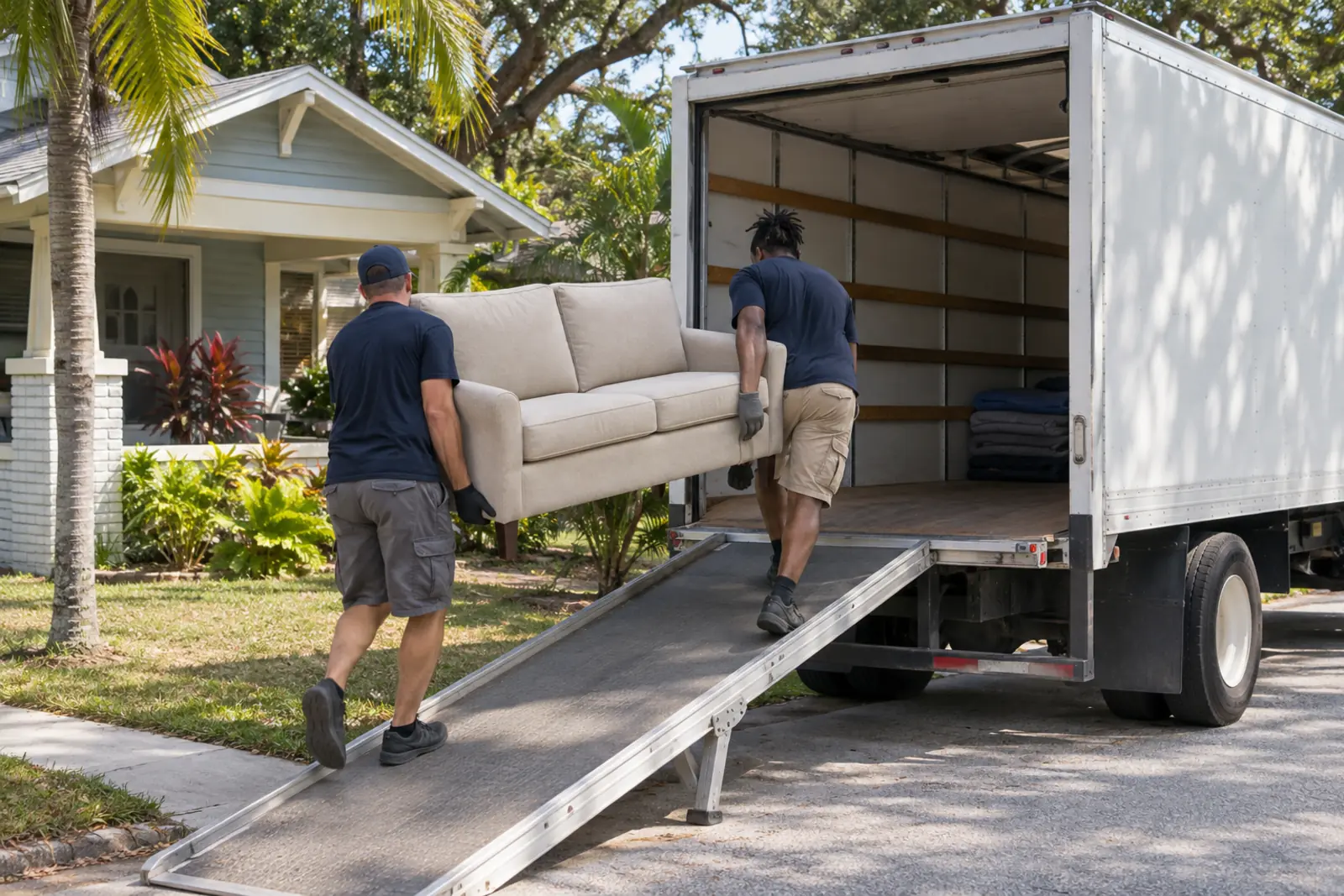
The junk removal process usually runs in six steps: you list what needs to go, get a written quote based on truck space, check the company, schedule a pickup window, clear a path on the day, and compare the final total with the quote before paying. This page explains each step so you can compare offers and spot the differences that matter. It describes how the industry usually works and does not offer the service.
Junk Removal Step by Step
1. Take Stock of What Needs to Go
List what needs to go and where it is. Note anything heavy, anything on an upper floor or behind a gate, and anything that might be refused, such as paint, chemicals or refrigerant-containing appliances. Photos make it easier for a company to give an accurate price.
Sorting the list into three piles saves money and arguments later: things to keep, things to donate or sell, and things that are true junk. Only the last pile usually needs a hauler. Items with a special disposal route are covered in the guide to what junk removal companies won't take, and the list of items haulers usually accept shows what is routine.
2. Get Written Quotes (the Junk Removal Quote Process)
Most companies quote by the volume your items take up in the truck, sometimes in fractions of a truckload, plus a minimum charge. Quotes may come from photos, a video call or an in-person estimate. A price given by phone without seeing the items is best treated as an estimate until it is confirmed in writing.
Ask these questions before you accept a quote:
- Is the price binding once I approve it, or can it change after the crew sees the load?
- Are labor, stairs, disposal or dump fees and sweep-up included?
- Is there a minimum charge, and a surcharge for heavy items such as concrete, tile or appliances?
- What will you refuse to take, and what happens to the price if I have more than I listed?
Get at least two or three quotes on the same list of items so the numbers can be compared. Appliances often have their own rules and fees, which are covered in the appliance removal guide.
3. Check the Company
Ask for proof of general liability insurance, check that the business is registered with the Florida Division of Corporations (Sunbiz) and holds the local business tax receipt where required, and read recent reviews on more than one platform. A professional company will answer these questions without hesitation.
4. Schedule and Prepare
Many companies offer an arrival window of a couple of hours and a call before the crew arrives. Confirm the date, the window and the written price in a message you can keep.
5. The Pickup
The crew loads the items, sweeps the area and gives you the final total. Compare it with the written quote before you pay, and ask for a receipt. Payment methods vary by company. Stay available during loading so you can answer questions about items you want to keep.
6. Where It Goes
Reputable haulers sort loads for donation, recycling and landfill. Ask what they actually do with furniture, electronics and metal. If you want your items donated, say so up front, and consider donating directly to a charity that offers pickup. If you want a donation receipt for taxes, ask for it from the charity that actually receives the items.
How to Prepare for Junk Removal
Good preparation makes the job faster and smoother. Before the crew arrives:
- Clear a path from the items to the truck, including doorways, stairs and gate access.
- Set aside anything you want to keep, and tag or move it out of the work area.
- Take drawers, shelves and pockets out of furniture and check them for papers, keys and valuables.
- Separate hazardous items. The EPA treats leftover household products that can catch fire, react or explode, such as paints, cleaners, oils, batteries and pesticides, as household hazardous waste and lists putting them out with regular trash as improper disposal, so keep them out of the pile unless the company has agreed to take them.
- Confirm parking or curb space for a large truck, and check whether your homeowners association has rules about hauling days or truck access.
- Wipe personal data from computers, phones and printers, and shred documents you do not want to leave behind.
For the hazardous items, the EPA advises checking with your local environmental, health or solid waste agency for collection sites or days, keeping products in their original labeled containers, and never mixing them (EPA household hazardous waste).
Alternatives to Hiring a Hauler
For a few items, a county bulk pickup may be free or cheap, as covered in the bulk trash rules guide. For a big renovation, a rented dumpster can be cheaper per cubic yard but you do the loading, and the renovation debris guide compares the options. For a full home or an inherited property, the estate cleanout guide explains how a larger cleanout is staged.
The overall picture of costs, item types and local options sits in the broader guide to how junk removal works in Tampa Bay. This page only covers the order of steps.
Frequently Asked Questions
How does the junk removal process work from start to finish?
You list the items, get a written quote based on the space they take in the truck, check the company's insurance and registration, book a pickup window, clear a path, and review the total against the quote before paying. The crew does the loading and sweep-up.
Do I need to be home during junk removal?
Many companies prefer that someone is present to point out what goes and approve the final total. If you cannot be there, agree on the price and the exact items in writing first, and make sure the crew can reach everything.
Can the price change on the day of pickup?
It can if the quote was an estimate and the load turns out larger or heavier than described. Ask before booking whether the quote is binding, and send photos so the estimate matches what the crew will see.
Should I sort my junk before the crew arrives?
Yes, at least into keep, donate and discard. Separating hazardous items such as paint and chemicals matters most, because haulers commonly refuse them and they need a separate disposal route.