Tampa Bay makes bulk trash pickup sound simpler than it is. Three counties, dozens of independent municipalities, and programs that operate on completely different rules - sometimes changing from one street to the next - mean that what works for your neighbor might not work for you. A homeowner in unincorporated Hillsborough County must haul furniture to a drop-off center with no curbside option by default. A resident in the City of Tampa gets one scheduled pickup per year, assigned by neighborhood, not on demand. Someone in Clearwater may find the program they counted on has changed. And anyone who just finished a bathroom remodel will discover that no municipal program in the region will take a single piece of their debris. This guide covers what each jurisdiction actually does, what it refuses, and when calling a junk removal company is the smarter move.
City of Tampa's SWEEP Program
The City of Tampa handles bulk curbside pickup through SWEEP - Solid Waste Enhanced Environmental Program. Each eligible household gets one free curbside bulk pickup per year, up to 10 cubic yards. Collection dates are assigned by neighborhood on a rotating schedule. To find out when your address is scheduled, visit tampa.gov/sweep and look up your specific location before making any plans around it.
The most important thing to understand is that SWEEP is not a call-in service. You cannot request a pickup whenever you need one. Your window comes when the city assigns it, which means depending on when your neighborhood's turn falls in the calendar, you could be waiting months. A homeowner who learns about SWEEP during an April cleanout might not see a truck until late fall or the following year.
Items need to be curbside by 8:00 p.m. on the Sunday of your assigned collection week - tampa.gov/sweep lists the exact cutoff and your specific collection date. Keep everything clear of parked cars, utility boxes, and anything that could obstruct traffic or sightlines.
Eligibility is limited to single-family homes and residential properties with four or fewer units. Larger apartment complexes and commercial addresses don't qualify. Note that SWEEP does not cover the New Tampa area, where residents are served by Hillsborough County Waste Management instead - check your address at tampa.gov/sweep to confirm eligibility. If you rent, confirm with your property manager before counting on SWEEP as your solution.
What Tampa's SWEEP Refuses
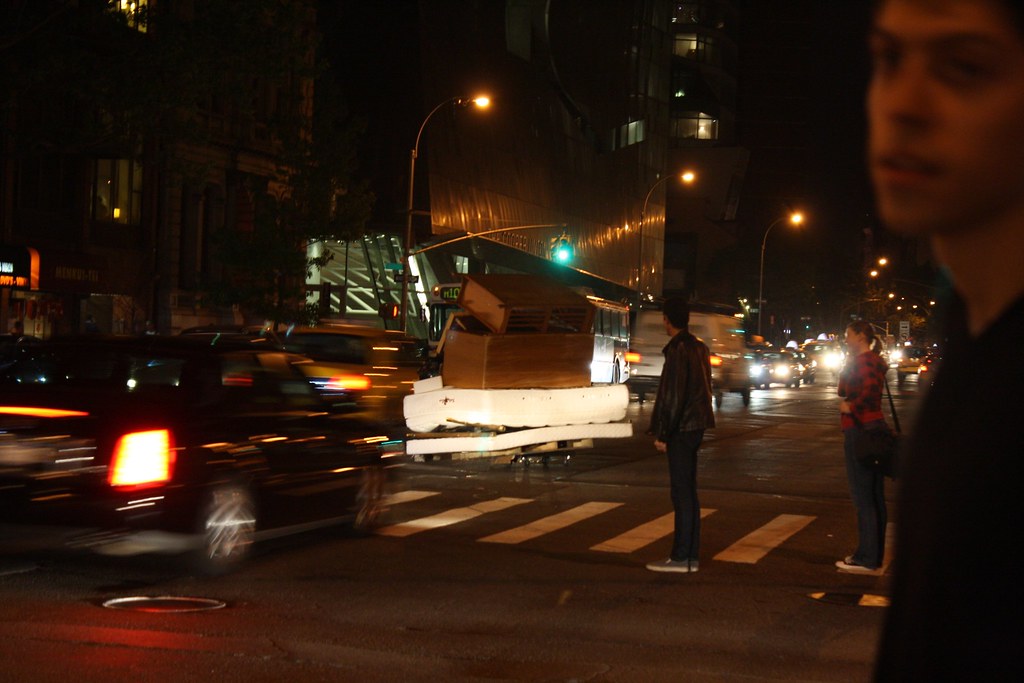
SWEEP's exclusion list is where renovation projects run into a wall, and the city is explicit about it. SWEEP will not collect any building materials - no exceptions. The refused items include drywall, tile, concrete blocks, brick, wood and plywood, roofing material, pipe, fencing, sheds, doors, and windows. Any of those in your curbside pile and the truck will pass by the whole load.
For a homeowner after a remodel, this exclusion eliminates the program entirely. It doesn't matter whether you replaced a single bathroom floor or gutted a kitchen - all the debris from that work is outside what SWEEP handles. You could wait months for your annual pickup and still have the crew decline.
Electronics are also refused. Old televisions, monitors, and computers need to go through separate e-waste channels - Hillsborough County Community Collection Centers accept electronics Monday through Saturday. Hazardous materials - paint, chemicals, and batteries - require disposal through Tampa's periodic household hazardous waste events, which run on a separate schedule from SWEEP entirely. A mixed load that includes any excluded item can cost you the whole pickup if you haven't separated things out first.
These exclusions aren't unique to Tampa - every municipal bulk program in the region has similar restrictions. What makes them worth spelling out is how poorly understood they are. Homeowners stage large piles after a renovation, wait for their assigned week, and watch the truck drive past.
Hillsborough County Unincorporated Areas
If your address sits outside Tampa city limits and outside any incorporated city like Plant City or Temple Terrace, you're in unincorporated Hillsborough County - and the program works differently here. There is no standard curbside bulk pickup. The county operates five Community Collection Centers where residents can self-haul bulky items for free, up to an annual volume cap of 10 cubic yards. Many residents assume it's curbside because that's how they picture bulk trash collection; it's not.
The five centers are located in Plant City, Seffner, Northwest Tampa, Gibsonton, and Wimauma. Each is open Monday through Saturday - check hillsboroughcounty.org for current hours and holiday schedules before you make the drive. Bring a Florida ID or proof of county residency; staff verify eligibility at the gate.
Self-haul means exactly that: you load the vehicle, drive to the facility, and unload yourself. For one broken sofa, that's manageable. For a full garage or storage unit worth of items, it's multiple trips and real physical work. You'll also need a suitable vehicle - most passenger cars can't handle a bulk load, and the centers don't provide equipment to help you unload.
Hillsborough County does offer a curbside special bulk pickup for residents who can't or don't want to self-haul, but this is a separate paid service - not part of the annual free allotment. Fees are based on the size and number of items collected; visit hillsboroughcounty.org or call (813) 272-5680 for current pricing. For anyone dealing with more than a couple of pieces, those charges compound quickly, and at that point comparing against professional junk removal is worth doing.
Pinellas County: It Depends on Your City
Pinellas County does not run a countywide bulk trash program. Each city manages its own service independently, with its own rules, schedules, and exclusions. Two households separated by a city boundary can have completely different options - or one may have no option at all.
St. Petersburg offers a free special pickup for furniture, TVs, and computer equipment, but it isn't automatic. Residents must schedule it in advance by calling the Sanitation Department at 727-893-7398 or through the SeeClickFix app - see stpete.org for current contact and scheduling information. For large accumulated quantities, materials that exceed standard pickup parameters, or anything in the building-materials category, the city charges a per-cubic-yard fee (currently $25.65 per cubic yard - verify the current rate at stpete.org). Once you're dealing with more than a modest furniture haul, that per-cubic-yard charge makes it worth pricing out professional removal by comparison.
Clearwater operates a curbside large-item collection program for household furniture and similar items, but program terms - including frequency limits, eligible items, and any current service changes - should be confirmed before you count on it. Visit clearwaterfl.gov or contact the Solid Waste Department at (727) 562-4920 to confirm current availability and any restrictions before staging items at the curb. Rules in Clearwater can differ from neighboring cities, so verify directly rather than assuming.
For other Pinellas cities - Largo, Dunedin, Tarpon Springs, Safety Harbor, and others - rules vary by municipality. Some have contracted haulers with scheduled bulk collection days; others direct residents to transfer stations. Look up your specific city's solid waste or public works page rather than assuming what applies next door applies to you.
Pasco County
Pasco County residents in unincorporated areas have two main routes for bulk items. The first is self-haul to a county facility - either the West Pasco Resource Recovery facility on Hays Road in Spring Hill or the East Pasco Transfer Station on Handcart Road in Dade City. Both are open Monday through Saturday. Which site fits depends on what you're hauling and your location; visit pasco.gov for what each facility accepts and any applicable fees or restrictions before loading the truck.
The second option is scheduling a pickup through a county-licensed private hauler that serves your zone. Pasco County licenses multiple private haulers - including Waste Pro and Waste Connections - for different parts of the county. Check pasco.gov or contact Pasco County Solid Waste at (727) 857-2780 to find out which hauler serves your address, then contact that hauler directly to arrange a collection date.
One rule Pasco residents need to know before anything else: do not put items at the curb until you have a confirmed pickup date. Premature setout can result in a code violation citation - check pasco.gov for current rules and penalties. Confirm first, then set out.
For hazardous materials, Pasco County operates permanent household hazardous waste collection centers at the West Pasco Resource Recovery facility (Hays Road, Spring Hill) and the East Pasco Transfer Station (Dade City), open Monday through Saturday. The county also holds occasional mobile collection events at other announced locations - these are not on a fixed monthly calendar, so monitor pasco.gov or sign up for county notifications so you're not caught waiting for a mobile event that isn't happening for another two months.
Five Situations Where Municipal Pickup Won't Cover You
Reading through each jurisdiction makes clear that Tampa Bay's bulk programs weren't designed around the same use cases. The gaps below aren't quirks of individual cities - they're structural features that appear across every program in the region, for consistent reasons.
- Volume over the annual cap. Municipal programs are budgeted per household per year, and the allotments reflect typical maintenance-level cleanouts, not major overhauls. Estate cleanouts, long-delayed garage purges, or properties that haven't been cleared in years routinely exceed what a single annual allotment covers. Once you've hit the cap, there is no extension, no second pickup, and no escalation path within any of these programs - you wait for the next cycle.
- Building materials from a renovation. Every program in the region excludes construction and demolition debris by category. This isn't a policy accident - it reflects that renovation waste requires different handling infrastructure than household bulky waste. The exclusion applies whether you replaced one floor or gutted an entire wing, and it applies equally in Tampa, St. Petersburg, Clearwater, Hillsborough County, and Pasco. The category is refused at the program level, not evaluated item by item at the curb.
- Same-day or time-sensitive needs. Municipal schedules are fixed in advance and can't be accelerated. SWEEP assigns collection windows by neighborhood months out. County self-haul centers operate on set weekday hours. Real estate deadlines, contractor return visits, and tenant move-ins don't align with any of these calendars, and no program in the region has a mechanism for moving up a collection date.
- Electronics and hazardous materials. E-waste and hazmat collection options across all three counties operate on separate schedules - some through permanent drop-off centers with fixed hours, others through periodic mobile events that are announced as they're confirmed. You might have batteries, paint, and an old television ready in February and find the next mobile event isn't until summer. No standard bulk program handles these materials, and the alternatives can't be relied on when you have a specific timeline.
- Properties outside program eligibility. Larger apartment complexes, commercial properties, and certain rental configurations are excluded from most programs before the question of what items qualify even arises. If your property type doesn't qualify, the program doesn't apply regardless of what you're hauling or when.
When to Call a Junk Removal Company Instead
Professional junk removal handles what municipal programs won't. The practical difference is scope: a crew will take construction debris, electronics, appliances, oversized furniture, mixed loads of varied materials, and virtually anything else that doesn't fit a municipal category - all in one trip, on a schedule that works around your timeline rather than a city calendar.
When you contact a junk removal company, the quote is shaped by three things: the volume of your load (usually estimated in truck fractions or cubic yards), the type of material (some items carry disposal surcharges, particularly appliances with refrigerants or certain electronics), and access - a second-floor room or a tight crawl space takes more labor than items already staged outside. To get a useful estimate, describe your load in terms of rough item count and size, flag anything that might count as a special-handling category, and ask whether there's a minimum charge and what it covers. Most providers offer free on-site or photo-based estimates before committing to a price, and getting two or three quotes in a competitive market like Tampa Bay rarely takes more than a few calls.
For renovation debris, the process differs from a standard bulk pickup in ways worth knowing before you schedule. You don't need to pre-sort by material type - a professional crew handles mixed loads of tile, drywall, framing, and fixtures in a single pass. You also don't need to stage everything at the curb; crews typically work through the interior space, which matters when you're dealing with a demolished bathroom or materials spread across multiple rooms. If you're still mid-renovation, some companies will coordinate a pickup during a contractor break rather than waiting until the full project is complete - useful when debris is accumulating faster than the work is finishing.
Same-day service is available from most Tampa Bay providers, with some offering tight arrival windows. For any situation with a hard deadline, that flexibility is the central reason to pay rather than wait.
It's also worth doing the math when a municipal program does charge. Hillsborough County's paid curbside service fee, St. Petersburg's per-cubic-yard overage rate (currently $25.65 - verify at stpete.org), or the cumulative cost of multiple self-haul trips to a county facility - in fuel, vehicle wear, and time - can put professional removal in a competitive range for anything beyond a few loose items.
Quick-Reference Summary: Tampa Bay Bulk Pickup by Jurisdiction
Here is how each program compares across the region:
- City of Tampa - SWEEP: One free curbside pickup per year per eligible household, up to 10 cubic yards. Neighborhood-assigned schedule, not on demand - check your address and collection window at tampa.gov/sweep. Note that New Tampa residents are served by Hillsborough County, not SWEEP. Excludes all building materials, electronics, and hazardous waste. Serves single-family and small multi-unit residential properties only.
- Hillsborough County (unincorporated): No standard curbside bulk pickup. Free self-haul (up to 10 cubic yards per year) to one of five Community Collection Centers in Plant City, Seffner, Northwest Tampa, Gibsonton, or Wimauma - open Monday through Saturday, current hours at hillsboroughcounty.org. Paid curbside option available separately with fees based on size and number of items; check hillsboroughcounty.org or call (813) 272-5680 for current rates.
- St. Petersburg: Free special pickup for furniture, TVs, and computers - must be scheduled in advance by calling 727-893-7398 or via SeeClickFix (see stpete.org). Per-cubic-yard fee applies to large or oversize quantities; check stpete.org for the current rate. Building materials not covered under the free pickup.
- Clearwater: Curbside large-item collection is available for household furniture and similar items, but program terms and any current service changes should be confirmed at clearwaterfl.gov or by calling the Solid Waste Department at (727) 562-4920 before you plan around it.
- Other Pinellas cities: Rules vary by municipality. Look up your specific city's solid waste or public works page - do not assume what applies in a neighboring city applies to your address.
- Pasco County (unincorporated): Self-haul to the West Pasco Resource Recovery facility (Hays Road, Spring Hill) or East Pasco Transfer Station (Dade City), or schedule through your licensed private hauler - Pasco County uses multiple haulers including Waste Pro and Waste Connections. Contact Pasco County Solid Waste at (727) 857-2780 to find your hauler. Do not set items at the curb before your confirmed pickup date. Permanent household hazardous waste centers at both main sites (Mon-Sat); check pasco.gov for mobile event dates.
- When professional junk removal is the right call: Building materials from any renovation or remodel, volumes that exceed your annual municipal cap, same-day or hard-deadline removal, electronics and hazardous materials, and properties not eligible for any municipal program. A professional crew handles all of these in a single trip, on a schedule you control.