Every junk removal company in Tampa Bay has a list of items their crew won't load onto the truck, and that list exists for reasons that go deeper than company preference. Federal Department of Transportation hazmat rules govern what can legally ride in a commercial vehicle. Florida state law bans certain categories from landfills outright. And the liability exposure from a chemical spill, a refrigerant release, or an improperly handled pressurized cylinder falls on the hauler. When a company tells you they can't take something, they usually mean it literally - not "we don't feel like it." The frustrating part is that most local competitors stop there. They publish a thin bullet list of refusals and leave you to figure out the rest. This guide fills that gap: for every major category a Tampa Bay junk truck will legally turn down, here is the specific program, facility, or workaround that actually gets it handled.
Wet Paint and Stains: The One Distinction That Could Save You a Trip
Paint is where most people run into their first surprise refusal - and where a small effort can flip a refusal into an acceptance.
Why wet paint is refused
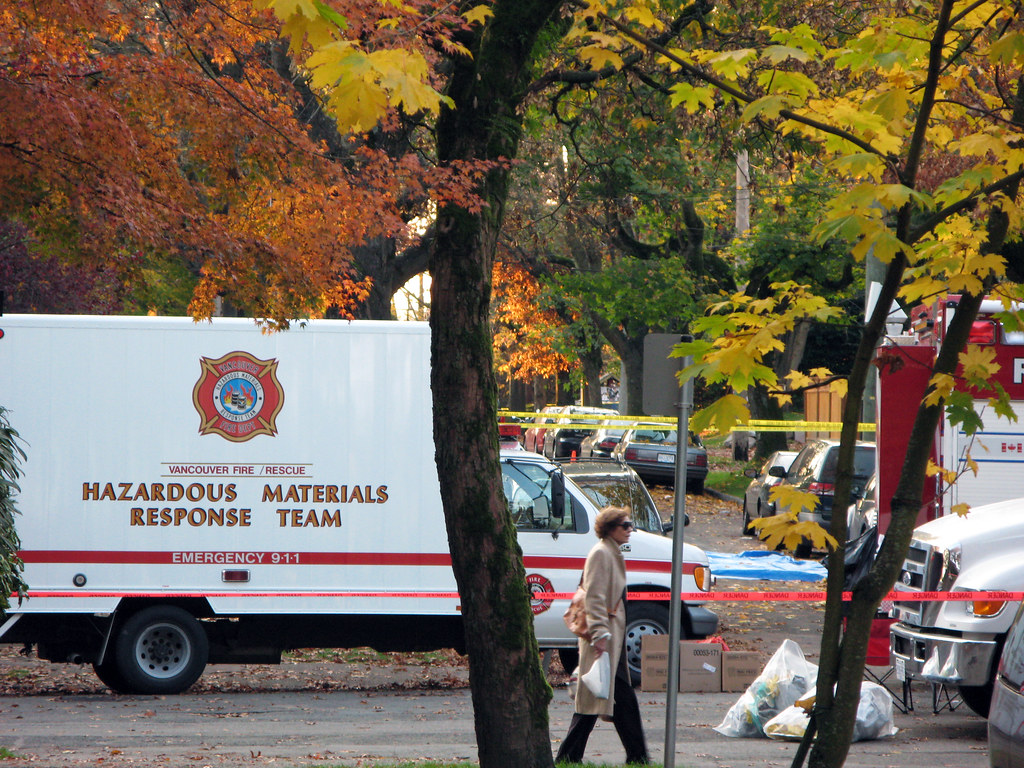
Wet or liquid paint is classified as flammable or toxic waste under federal DOT transport rules. An open junk truck carries mixed loads with no containment for liquids, making a leaking paint can a genuine regulatory and safety problem. This applies to latex, oil-based, and specialty stains alike - liquid means refused.
The kitty litter workaround
What most Tampa Bay junk removal content never mentions: fully dried, hardened latex paint is generally accepted. Pour kitty litter or a commercial paint hardener into leftover latex cans, let it set until the surface is completely solid, and the can moves from "refused" to "loadable." This works for latex only. Oil-based paint requires proper disposal regardless of its state.
Where to take what you can't harden
For liquid paint you can't or don't want to harden, the county Household Hazardous Waste programs are the primary disposal route for Tampa Bay residents. PaintCare, the national paint-industry stewardship program that operates in many states, does not currently include Florida, so county HHW events are the go-to option here. Check your county's solid waste website for current paint disposal locations and upcoming event dates.
Hillsborough County operates HHW collection events at multiple rotating locations - generally covering the first, second, and third Saturdays of the month from 8 AM to 2 PM, with different sites active on each Saturday. Bring a state-issued photo ID showing a Hillsborough County residential address. Check hcfl.gov for the current facility schedule before making the trip, since sites rotate. Pinellas County residents have considerable scheduling flexibility - the main HHW facility in St. Petersburg accepts drop-offs on select weekdays and Saturdays, and the north-county satellite in Clearwater operates on select Saturdays. Check pinellas.gov/hhwcalendar for the current calendar before driving out.
Propane Tanks and Pressurized Cylinders
A standard grill tank looks harmless sitting beside your other junk, but DOT regulations classify pressurized cylinders as hazmat. This applies whether the tank is full, partially full, or feels empty - residual propane gas and internal pressure remain. No reputable hauler will load one.
The Blue Rhino exchange workaround
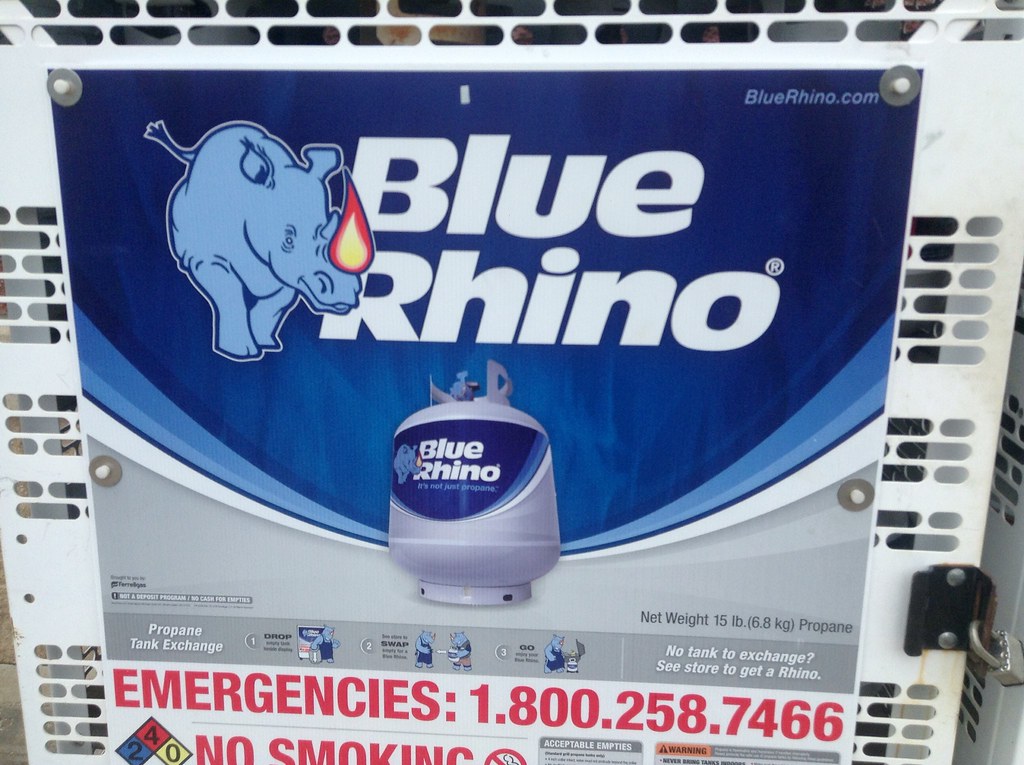
The most practical solution for standard grill-sized tanks is the Blue Rhino exchange cage, found at Home Depot, Lowe's, Walmart, and ACE Hardware locations throughout Tampa Bay. You do not need to buy a new tank to use this. Write "R" or "RECYCLE" on the old tank with a marker and place it in the cage - that routes it to Blue Rhino's recycler rather than the swap loop. No cost, no appointment. This is a legitimate disposal path that most people have no idea exists.
Larger tanks and genuine empties
For large stationary tanks used for whole-home or pool heating, a licensed propane supplier needs to purge and certify the tank before it can be scrapped or relocated. Contact the company that originally installed it - many handle removal as part of their service. For small cylinders that are completely empty and depressurized, such as used camping canisters, some haulers will accept them. Ask specifically when booking, since policies differ between companies.
Asbestos and Pre-1980 Materials: Three Rules, One Answer
No junk removal company can legally touch asbestos-containing materials. The reason isn't policy preference - it's a stack of overlapping regulations with real enforcement.
Where asbestos hides in Tampa Bay homes
Homes built before 1980 in the Tampa Bay area commonly contain asbestos in places that don't look like asbestos:
- Nine-inch and twelve-inch vinyl floor tiles standard in mid-century construction
- Pipe wrap insulation in utility rooms and crawl spaces
- Textured "popcorn" ceilings applied widely through the 1970s
- Roofing felt beneath older shingles
- Gray duct tape on original HVAC systems
None of these materials look dangerous. All of them can release fibers when cut, sanded, or broken apart.
The regulatory layers
Asbestos disposal in Tampa Bay sits under three overlapping frameworks. Federal EPA standards set the baseline handling requirements. Florida DEP enforces those standards statewide for residential properties. And for commercial buildings or larger multi-unit residential structures in Hillsborough County, the Environmental Protection Commission of Hillsborough County requires written notification filed before removal begins - with enough required lead time that last-minute demolition plans simply don't work. Check the EPC's current requirements directly for applicable thresholds and the notification process. Missing that step carries real penalties, not just a warning.
Under federal NESHAP rules adopted by Florida, the formal written pre-renovation survey and notification requirement applies primarily to commercial properties and larger residential buildings - single-family homes under the control of the homeowner are generally exempt from the formal notification requirements. That said, getting a professional asbestos inspection before disturbing suspect materials in any pre-1980 home is strongly recommended on safety grounds regardless of legal thresholds. A licensed asbestos consultant can sample materials, send them to a certified lab, and issue a written report. If asbestos is confirmed, only a licensed abatement contractor may remove it. The Florida Department of Business and Professional Regulation licenses asbestos consultants, and the Florida DEP website maintains a directory of licensed abatement contractors. General demo and junk hauling cannot begin until abatement is complete - the two scopes cannot run concurrently.
Household Chemicals, Pool Chemicals, Solvents, and Motor Oil
This is the broadest category of refusals, and the one where local facility knowledge matters most.
What counts as household hazardous waste
- Pesticides, herbicides, and partially used yard-care concentrates
- Pool chemicals - chlorine, muriatic acid, algaecides
- Solvents, paint thinner, turpentine, and degreasers
- Motor oil and automotive fluids (gasoline, brake fluid, transmission fluid)
- Mercury-containing items including older thermometers and certain switches
- Fluorescent and CFL bulbs
- Compressed aerosol cans beyond standard household trash limits
Pool chemicals deserve a specific note. They're refused not just because they're corrosive, but because mixing them with other waste in a truck - even a small accidental splash - can produce toxic gas or trigger an explosive reaction. This is a chemistry problem, not a liability preference.
Hillsborough County HHW disposal
Hillsborough County's HHW collection events accept the full range of HHW categories: paint, pesticides, pool chemicals, solvents, motor oil, and compressed gas. Events rotate across multiple facilities - generally on the first, second, and third Saturdays of each month from 8 AM to 2 PM - with different sites active on different Saturdays. Check hcfl.gov for the current schedule so you know which facility is open on which date. If you're in Hillsborough and need to dispose of pool chemicals before a home sale or renovation, having multiple Saturday options each month helps with planning, but always confirm the current schedule before making the trip.
Hillsborough County also operates a network of Community Collection Centers across the county where residents can drop off electronics, batteries, and many appliances during regular operating hours without waiting for a special HHW event. The county's "Where Does It Go?" tool at hcfl.gov/solid-waste-items lets you type in any specific item and get the appropriate facility and disposal method - it covers hundreds of household items and most Tampa Bay residents have no idea it exists.
Pinellas County HHW disposal
Pinellas County residents have more scheduling flexibility than Hillsborough counterparts - the main facility in St. Petersburg and the north-county satellite in Clearwater together cover both weekday and Saturday windows. Check the Pinellas County Utilities website or pinellas.gov/hhwcalendar for current hours and locations before making the drive.
The motor oil shortcut
Used motor oil has a faster path than an HHW event. AutoZone, O'Reilly, and Advance Auto locations throughout Tampa Bay accept it free of charge through voluntary recycling programs - no appointment, no monthly schedule required. Hillsborough County Community Collection Centers accept it as well. Gasoline and mixed fuel must go through the formal HHW route; the auto parts store shortcut does not extend to fuel.
Tires: Limited, Not Impossible
Many junk removal companies won't load tires in a mixed residential haul because tire disposal runs through a separate recycling fee structure. But that doesn't leave you without options. Hillsborough County residents can drop off up to 12 passenger car tires per year at Community Collection Centers, covered by the county's solid waste assessment - meaning most homeowners already have this benefit and aren't using it. Check hcfl.gov for center locations and any current limits. Many tire retailers will also accept your old tires when you purchase a new set - ask at the counter when dropping off for the installation, as this is common practice though policies can vary by shop. Hillsborough and Pinellas counties occasionally run tire amnesty events that lift normal quantity limits; follow the county solid waste pages for announcements.
Sharps and Medical Waste: A Free Local Network Most People Miss
Syringes and sharps containers cannot go in a junk truck or in household trash - they're classified as biomedical waste with a separate handling chain. In Tampa Bay, the free disposal infrastructure is better than most residents know. Hillsborough County's sharps disposal program offers free residential drop-off at Tampa General Hospital seven days a week, and on weekdays at AdventHealth Carrollwood and HCA Florida South Tampa Hospital. All three sites accept sharps containers from county residents at no charge. For current hours and the full site list, search "Bay Area Sharps Disposal Program" or check the Hillsborough County health department website. Pinellas County residents should contact their county health department directly, as participating sites differ. Some retail pharmacies also accept sealed sharps containers - call ahead to confirm before driving over.
Electronics: Responsible Disposal Matters Even Without a State Ban
Florida does not currently have a statewide law that bans consumer electronics from landfill disposal - unlike some other states, there is no mandatory recycling statute with a formal landfill prohibition. Responsible haulers and county solid waste programs route electronics to certified recyclers regardless, both because it is the environmentally sound approach and because certain electronics may qualify as hazardous waste under federal regulations. When comparing quotes, asking how a company handles e-waste is still a useful screening question.
Most Tampa Bay junk removal companies will accept electronics but may add a per-item charge to cover certified recycling costs. That charge is legitimate and appropriate. When comparing quotes, ask specifically about their e-waste handling - a company with a certified recycling vendor is doing it correctly. Free and low-cost alternatives in the area include:
- Best Buy stores, which accept many consumer electronics for in-store recycling - note that some items such as monitors and CRT televisions may carry a per-item recycling fee, and there is a household drop-off limit per day; check their website for current accepted categories, fees, and limits
- Hillsborough County Community Collection Centers during regular operating hours
- Manufacturer take-back programs from brands like Apple, Dell, and others, which arrange pickup or mail-in for their own devices
Items That Look Prohibited But Often Aren't
The flip side of this guide is equally useful. Some items that appear on refusal lists are actually acceptable depending on their condition or the company's certifications. Knowing how to ask the right question can save you an unnecessary errand.
Dried latex paint
Phrasing matters when you call. "Old paint cans" reads as a chemical hazard. "Dried, hardened latex paint cans" is a different conversation. Tell the crew specifically when they arrive that the cans are fully hardened - don't assume the booking note travels with the job.
Empty propane tanks
A completely empty, depressurized small canister - a used camping cylinder, for example - is different from a grill tank with residual gas. Some companies will accept truly empty small cylinders. Ask directly: "If I have a fully empty, depressurized camping canister, can your crew take it?" Policies differ by company.
Refrigerators and appliances with refrigerant
The Clean Air Act requires refrigerants to be recovered by certified technicians before any appliance can be transported for disposal. A reputable hauler that accepts refrigerators either employs certified staff or has a verified vendor relationship for recovery. When booking, ask: "Are you certified to handle refrigerant recovery, or do you have a certified vendor?" A company that answers clearly is one that's handling it right. One that hedges or doesn't understand the question is a flag.
Frequently Asked Questions
Can I put old paint cans in my Tampa Bay curbside bin?
Liquid paint cannot go in curbside recycling or regular trash - it is classified as hazardous waste. Dried, hardened latex paint in cans is generally accepted in regular trash in most Hillsborough and Pinellas municipalities, but check your specific city's guidelines since rules vary by jurisdiction. Oil-based paint in any state must go through an HHW program.
Why do junk removal companies charge extra for electronics but not other items?
While Florida does not currently have a statewide law banning electronics from landfills, responsible haulers route them to certified recycling vendors regardless - it is the environmentally sound practice, and some electronics may qualify as hazardous waste under federal rules. Certified recycling carries a real cost, and the extra charge covers that vendor fee. Companies that don't charge extra for electronics should be asked directly how those items are disposed of, since the alternative to a recycling cost is often bypassing the proper recycling chain.